- Phone: (361) 792-0822
- Fax: (361) 288-4109
 Skip to content
 Cognitive-linguistic disorders affect how a person thinks, communicates, and processes information—skills that are essential for daily life. These difficulties can arise after a stroke, brain injury, or neurological condition, or they may emerge gradually due to cognitive decline or illness.
This kind of disorder may impact a person’s ability to find words, stay organized in conversation, remember what was said, or process language quickly and clearly. Even when speech sounds fine, communication can still feel confusing or exhausting.
Cognitive-linguistic therapy is designed to help rebuild or support these skills, with the goal of improving independence, clarity, and confidence in real-life situations.
Communication isn’t just about speech—it depends on how the brain processes and organizes information.
Cognitive-linguistic skills include:
When these areas are affected, it can feel difficult to follow conversations, remember tasks, or express yourself smoothly.
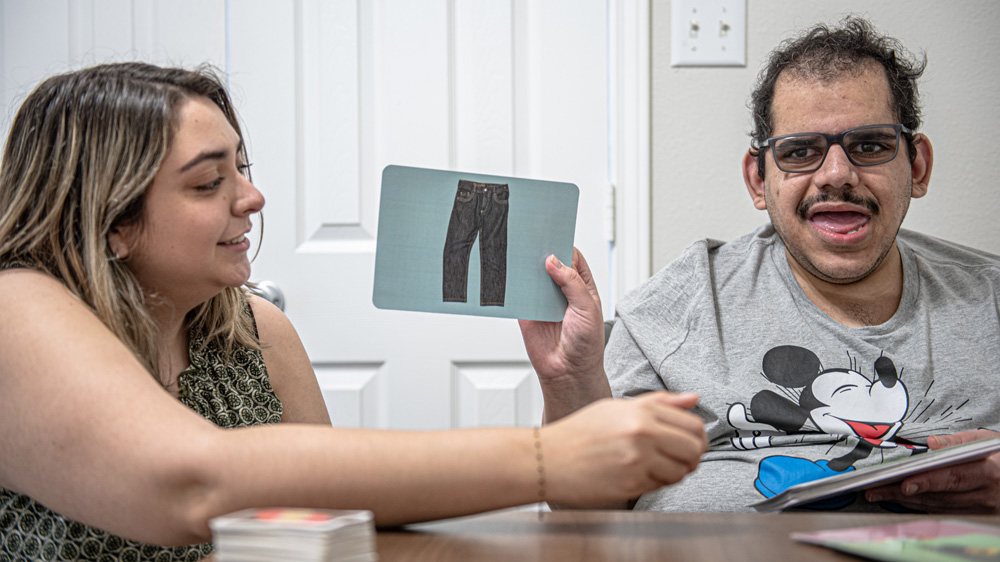
Cognitive-communication changes may be sudden (after stroke or injury) or gradual (as part of aging or neurological change). Some signs include:
✔ Difficulty focusing or being easily distracted
✔ Trouble finding the right words or staying on topic
✔ Repeating stories or forgetting conversations
✔ Slowed processing or needing more time to respond
✔ Feeling overwhelmed in noisy or fast-paced conversations
✔ Trouble organizing thoughts or making decisions
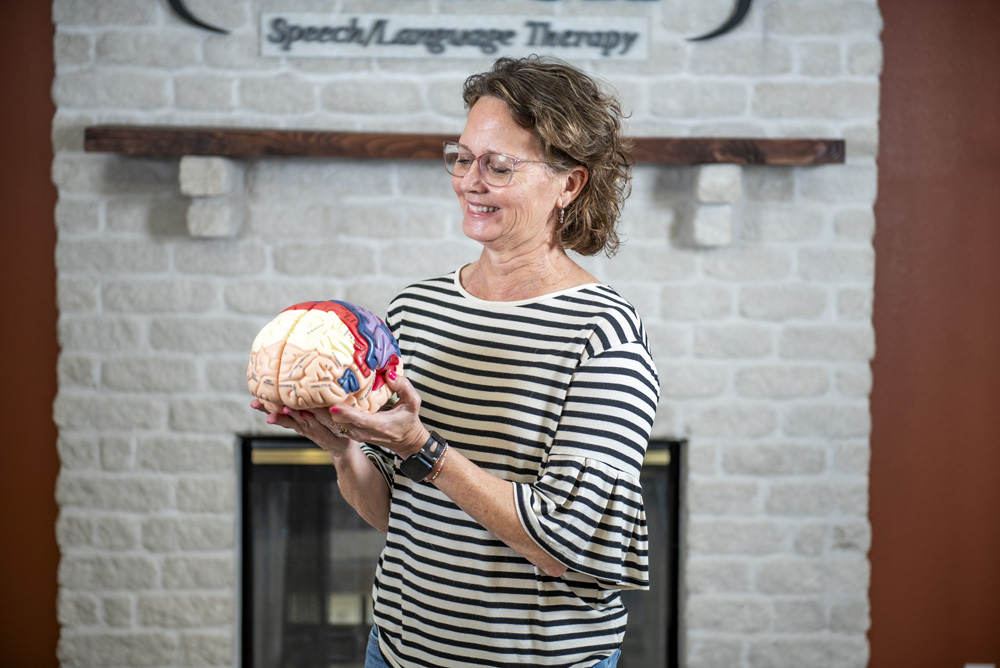
These difficulties can result from a variety of medical or neurological conditions, including:
✔ Stroke or Transient Ischemic Attack (TIA)
✔ Traumatic Brain Injury (TBI)
✔ Concussion or Post-Concussive Syndrome
✔ Parkinson’s Disease or ALS
✔ Multiple Sclerosis (MS)
✔ Dementia or Mild Cognitive Impairment
✔ Brain Tumors or Neurosurgery Recovery
Cognitive-linguistic therapy can support recovery, promote compensation strategies, and help individuals adapt with dignity and success.
Your speech-language pathologist will assess cognitive and language-based functions through both structured tasks and real-life scenarios. The goal is to understand how these skills work together—and where support is needed most.
Your evaluation may explore:
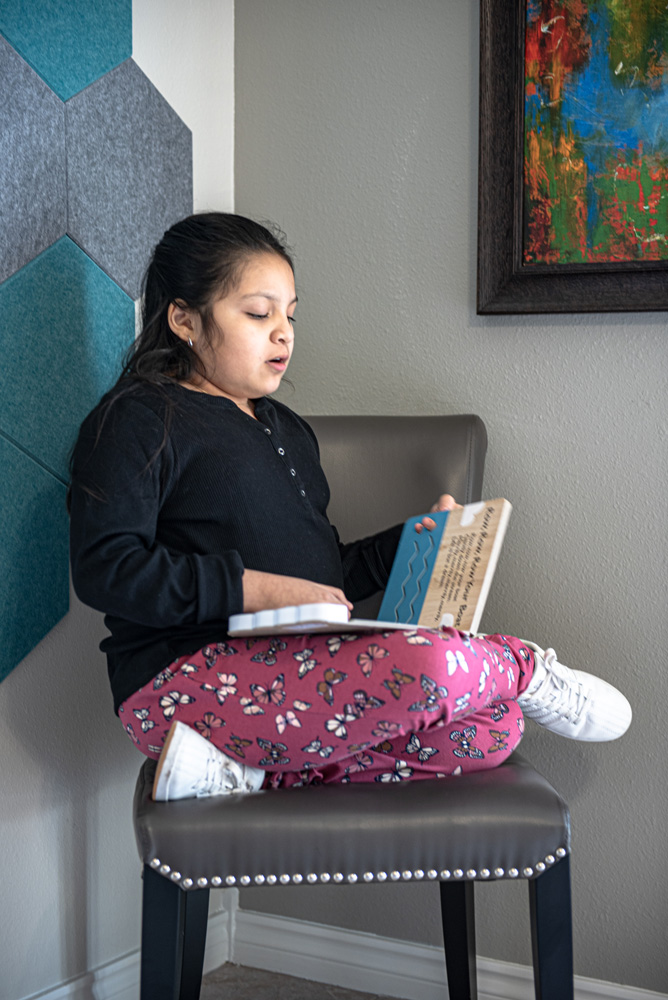
Therapy sessions are focused, collaborative, and entirely customized. Some sessions may focus on strategies for memory or focus; others may involve practicing real-life communication tasks, like phone calls, appointments, or following complex instructions.
Therapy may include:
Cognitive-linguistic therapy helps restore clarity, reduce frustration, and support independence. Whether you’re recovering from an event or adjusting to long-term changes, you don’t have to navigate it alone.
Remember:
✔ Cognitive-linguistic skills support daily thinking and communication
✔ Changes can occur after illness, injury, or over time
✔ Therapy helps rebuild skills and find new strategies
✔ We’ll meet you where you are—and help you move forward
 Optimized by Seraphinite Accelerator